

Remanufactured turbochargers provide cost savings amid inflation

There is no better time to offer a remanufactured turbocharger to customers as the current economic climate has led to a perfect storm for vehicle owners.

From a customer viewpoint, remanufactured products using high-quality components can be considered the same as a new product, providing a more attractively priced alternative to the original.

Turbocharger remanufacturing is increasing in popularity within the aftermarket, as an original equipment turbo can often be very expensive to replace. Remanufacturing preserves as much of the material in the original product as possible, therefore using less raw materials than in the manufacture of new products.

Remanufacturing involves vehicle parts being rebuilt to a standard equal to, or greater than, the original manufacturer specification. At times, aftermarket design improvements mean that remanufactured parts often outperform the original equipment (OE) originals, as any design defects can be engineered out.

The process ensures that the original design and quality specifications are all met, so technicians and end users can be confident in the quality of the remanufactured vehicle part they receive.

In the past, low-quality components from unreputable suppliers have been used in the remanufacture of turbochargers, which has created preconceptions about the reliability of remanufactured parts. However, this opinion about remanufacturing has changed significantly in recent years.

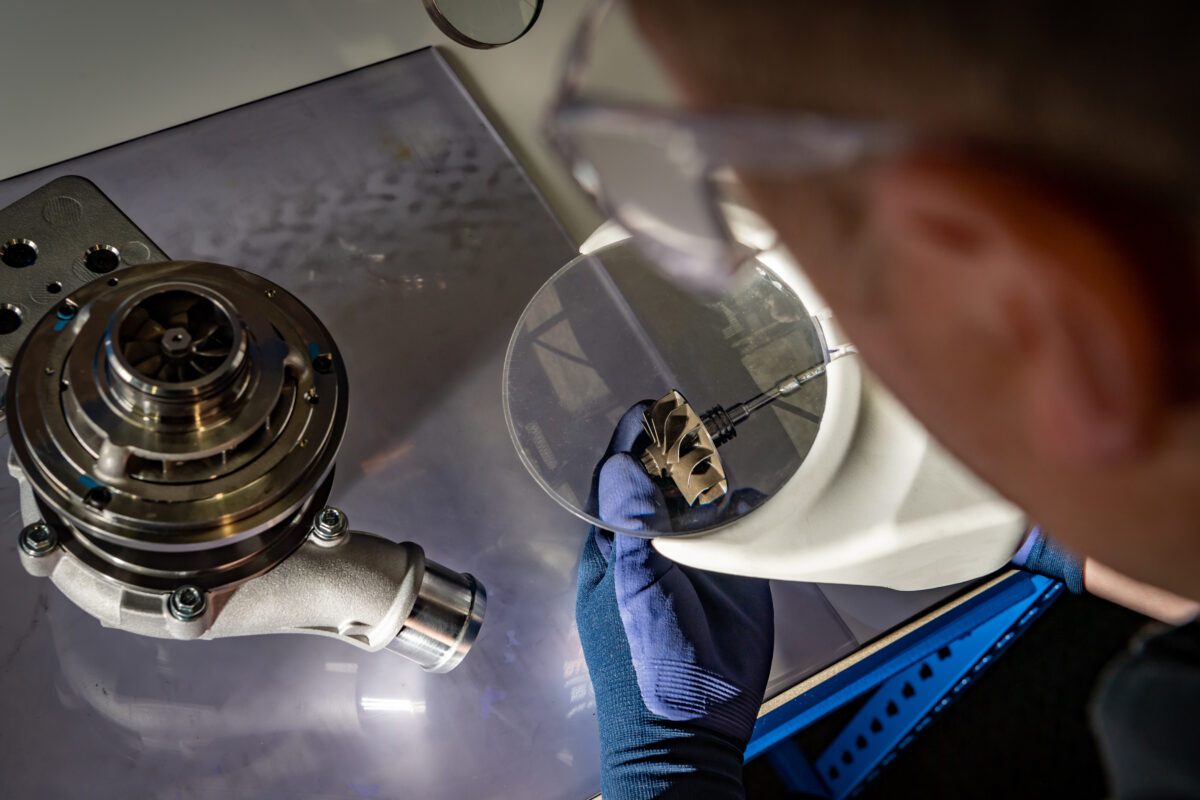
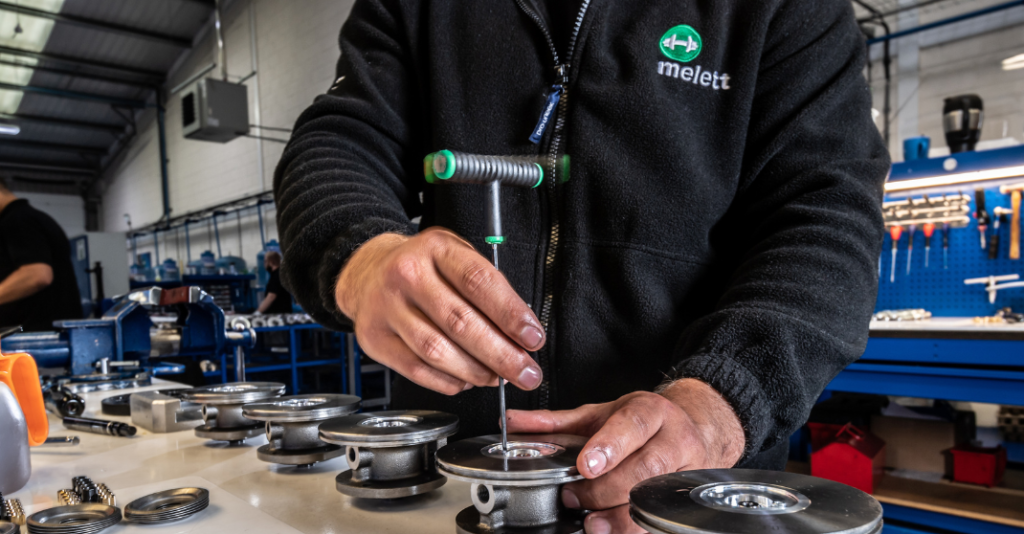
A professional turbo repairer will carry out pre-production checks of all old units to ensure that only the best quality turbo core is selected for remanufacturing. All parts are inspected for damage and wear. Any worn or damaged parts will be replaced. The core assembly is balanced and only when a unit passes the final balancing tests is it deemed ready for final assembly.

Tom Wright, product manager said: “The entire UK economy is being gripped by the cost-of-living crisis, and the garage and automotive sector is no exception.”

“With service providers and customers concerned about spending, it’s important to consider the benefits in cost offered by remanufactured components, with significant reductions in price when compared to original equipment (OE) products.

“Cost savings aside, we’re reminding the industry that there’s no compromise on safety and part quality. The use of high-quality components in remanufacture ensures a long-term, sustainable approach on vehicle repair and servicing.”

Automotive Parts Remanufacturers Association (APRA) Europe recently reported that1 remanufacturing saves millions of tons of carbon equivalent emissions, 85 percent of raw materials and 55 percent of energy compared with new production, meaning remanufacturing is sustainable and resource friendly.

“Remanufacturing provides additional benefits on a wider scale, with the environment benefitting from carbon savings and reduced emissions from not having to extract raw materials in the manufacturing process of a new turbocharger,” Wright says.

At Melett, we understand the importance of using the correct materials and are committed to supporting the turbocharger repair market with the highest quality parts and service.

For more information about us, including technical resources or how to find your nearest turbo specialist, click here.

1: APRA Europe, https://apraeurope.org/?method=ical&id=1920

Why turbocharger removal is unnecessary to diagnose an oil leak

Oil leaks can be caused by several factors, but technicians shouldn’t rush to remove the turbocharger in the event of a leak to diagnose a fault, says Product Manager, Tom Wright.

There can be a variety of reasons why a turbocharger may leak oil with the main factor being incorrect pressure within the compressor and turbine housings. “Before removing the turbo, technicians should check the location of the oil leak as different diagnoses can be given depending on which end the leak is located. Over 90 percent of turbocharger failures are consequential of other issues, so identifying the root cause before replacing a turbo is key.” says Wright.

When looking for causes of oil leaks at the compressor end of the turbocharger, a good place to start would be to inspect the air intake hose for damage, splits, leaks and incorrect fitment. At the turbine end, oil leaks can be caused by warped exhaust flanges, incorrect gaskets, or cracks in the turbine housing – something that is sometimes only visible when the turbo is hot.

If there is a kink, bend, or partial blockage in the oil return pipe, this will cause the oil pressure to build up in the bearing housing, resulting in leaks from both turbine and compressor ends.

It is worth noting that removal of intake or exhaust pipes to inspect the turbocharger for oil leaks will cause leaks to occur. In doing so, you inherently cause a pressure drop which allows oil to leak from the turbocharger.

To prevent oil leaks when fitting a turbocharger, technicians should ensure that the air systems and oil drain systems are clear from any blockages. They should always fit the correct oil gaskets for the turbocharger. They are also advised to not use silicone in an attempt to seal oil inlet and oil outlets. Silicone can become easily dislodged and can restrict or block oil passages as a result.

Technicians working on turbochargers should also check the vehicle’s exhaust system, including the diesel particulate filter and catalytic converter, to make sure no leaks or blockages are present.

Using the correct parts and high-quality equipment is crucial to successful turbocharger maintenance.

Melett is renowned for producing OE quality products to help the turbo aftermarket produce the highest quality repairs. All Melett turbochargers are built, balanced and flow tested in the UK to the strictest quality standards to ensure OE performance during operation.

To help identify common failures in warranty situations and to provide advice on how to prevent future failures occurring, check out our series of educational technical videos.

The dangers of overspeeding on longer-term turbo reliability

What is overspeeding and why does it damage turbos?

Overspeeding is a term used when a turbo is operating well above its normal operating limits, and the resultant strain of overspeeding can cause untimely failure of the turbo, as well as the internal combustion engine (ICE) and associated components, Tom Wright, our product manager warns.

One of the main causes of overspeeding is insufficient airflow from the turbocharger to the engine, which could be caused by a torn air pipe, a blocked air intake or a leak between the compressor and the engine. If there are any leaks, cracks or poor seals between the compressor and the engine, the turbo will have to work much harder than it should to deliver the required air levels to the engine.

“When the engine needs more air than the turbocharger can supply, overspeeding occurs. The turbocharger then has to work outside of its usual operating limits which can, in extreme cases, cause blade damage including partial loss of blades, fatigue fractures or a burst compressor wheel,” says Wright.

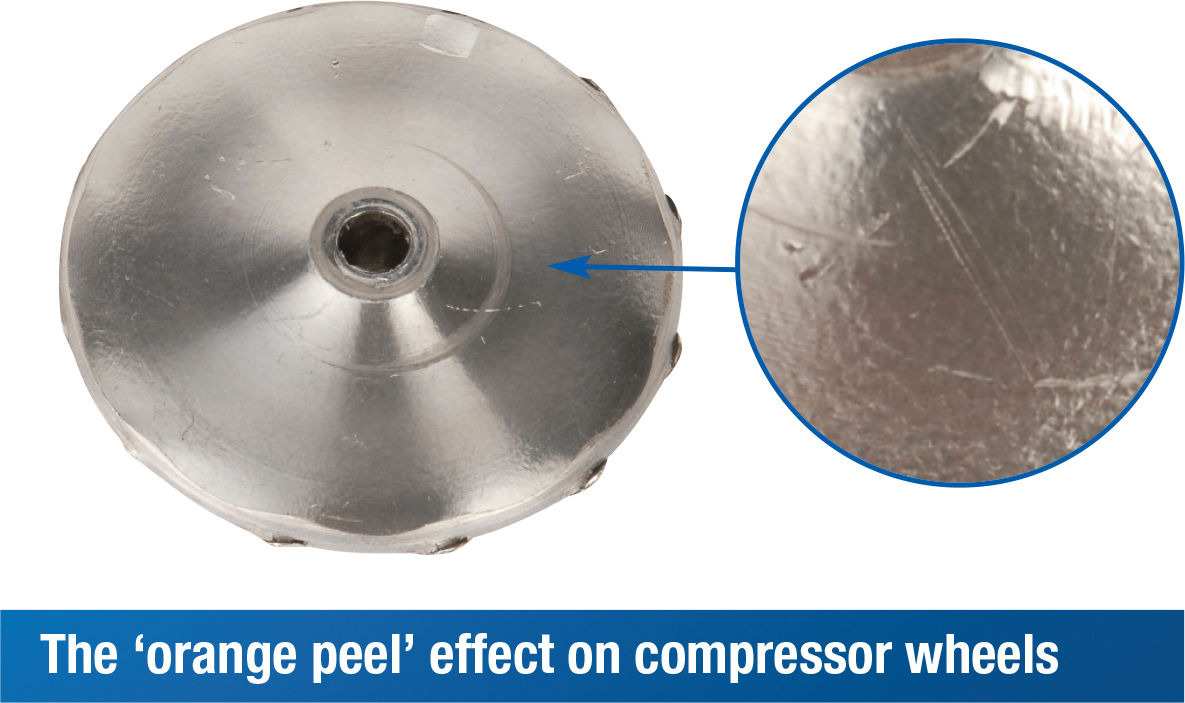
A common symptom of overspeeding is the presence of the ‘orange peel’ effect on the back face of the compressor wheel. This is created by expansion and contraction.

When the compressor wheel is subjected to overspeeding, it grows in size and this expansion causes cracks between the grain boundaries of the material.

In mild cases, the component will return to its original state like elastic but in most cases these cracks begin to grow and eventually, part of the hub can break away.

Another cause of turbo overspeeding can be remapping the electronic control unit (ECU). As drivers of some performance vehicles look to maximise the fuel efficiency or performance of their cars, some turn to remapping or ‘chipped’ engine work, which involves altering the car’s ECU to deliver a different power map or torque range. This can then take the standard factory fitted turbocharger outside the operating range it was design to work within.

Wright advises when diagnosing a turbocharger fault, technicians should be wary that as a consequence of overspeeding the signs of other failure modes such as insufficient lubrication can be present. This is due to the barrier created by the oil film within the bearing systems failing. In turn, this causes contact between components as overspeeding occurs and the turbo fails.

For more information on overspeeding and the preventative measures you can take, visit our dedicated technical article: Common turbo failure – Overspeeding. You can also

View our Melett Turbo Tips video - How does Overspeeding cause turbocharger failure?

We’re urging technicians to think ‘turbo’ this winter

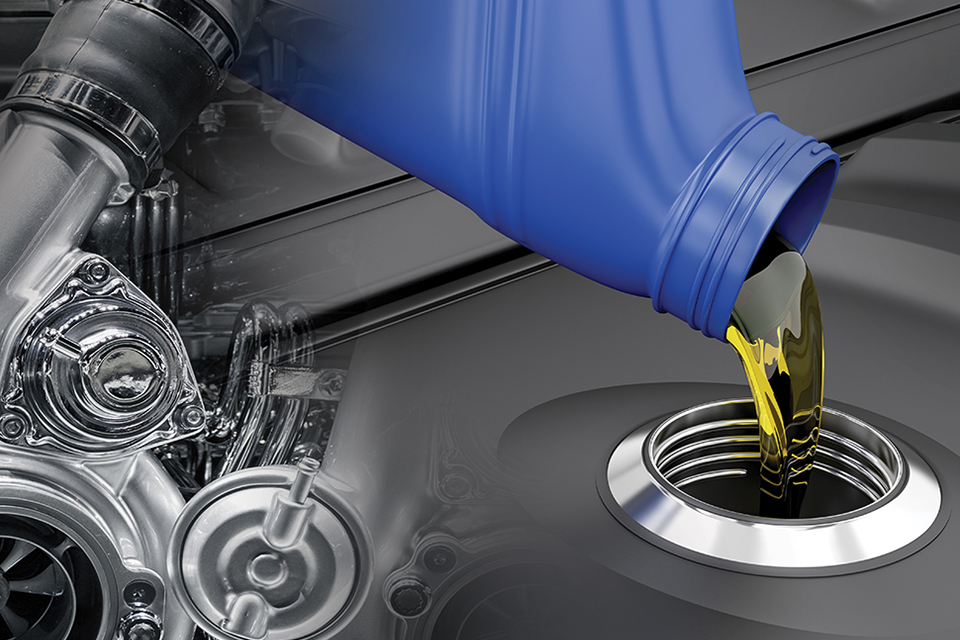
Lubrication is a key element to ensuring a turbocharger is doing its job correctly. Therefore, it is essential to check that a vehicle’s oil is the correct grade. When fitting a replacement turbo, it is important that the oil system has been primed and is in full working order. If this is not the case, it can lead to premature failure.

In the winter months, don’t forget to think turbo!

As the trusted aftermarket brand for precision engineered turbochargers and parts, we’re urging technicians to stay on top of turbo maintenance this winter and are offering best practice tips to help customers prolong the life of their turbo as temperatures plummet.

Lubrication is a key element to ensuring a turbocharger is doing its job correctly. Therefore, it is essential to check that a vehicle’s oil is the correct grade. When fitting a replacement turbo, it is important that the oil system has been primed and is in full working order. If this is not the case, it can lead to premature failure.

Many turbo-related issues are simply down to neglect, and with more than a third of drivers expected to skip servicing their vehicle in a poll[1] taken in 2022, we’re advising technicians to not only encourage regular servicing, but also to ensure the vehicle’s oil and oil filter is checked and replaced to protect the turbo from damage caused by contamination.

Another top tip for motorists is to adapt their driving habits during the colder weather, especially if the vehicle has not been run for long periods. Simple changes such as waiting a few minutes before driving at high revs to allow the engine to warm and oil to flow through the turbocharger. This prevents damage to components within the turbocharger. By avoiding revving the engine, unnecessary stress on the turbo is avoided.

Oil – The lifeblood of a turbocharger

Product Manager, Tom Wright, outlines the core purpose of oil in relation to the turbocharger. 

Wright argues there are many ways in which oil related issues can damage the components, outlines why oil is the lifeblood of a turbocharger, and details the preventable steps a technician can take.

Oil contamination

Dirty oil is one of the top killers of a turbocharger and can happen in a multitude of ways. When repairing the vehicle, if the oil system is not emptied, purged and changed correctly, it can leave debris from the previous failure, which can contaminate the new oil and cause premature failure. If a damaged, or poor-quality oil filter is used, this is another way debris can pass through the filters and into the oil system. In addition, liquid contaminants can lead to premature oil degradation, and increased corrosion and wear, while oil degrading can also be caused by excessive temperatures or extended service intervals.

Prevention

If a turbo has failed, it’s important to ensure that all the oil systems are purged and free from any foreign objects. A simple way of preventing dirty oil from affecting the turbocharger is by taking extra care when changing the oil during servicing to prevent accidental contamination. It is also key to check for engine wear that could leave swarf deposits.

Something that must be done is to replace or clean the oil inlet pipes and in-line micro filters, as this helps to prevent carbon deposits entering the oil flow to the bearings. It is important to get a vehicle serviced every year or every 10,000 miles, as well as changing the oil in accordance with the vehicle manual, as it gives a turbo the best chance of having a longer life cycle.

Insufficient lubrication – oil starvation

It is often caused by blockages in the oil feed pipe and micro filters within, damaged or bent oil feed pipes, a lack of priming of the new turbo, as well as a damaged or worn oil pump, or sludge and coke build up in the bearing housing from hot shutdowns.

Prevention

Using the correct grade of engine oil specified by the OEM engine manufacturer is essential to give the turbocharger a long-lasting life cycle. Equally, oil supply is critical to the turbo, so it is important that a technician ensures the oil flow is correct. Priming the turbocharger and oil systems can stop the turbo from instant failure. Oil inlet pipes should also be cleaned or replaced to remove carbon deposits or sludge that could restrict oil flow to the bearing systems. It is important that drivers are aware that they need to allow time for the engine to warm up at the start of each journey and cool down at the end.

Oil leaks

Oil leaks are somewhat of a myth when it comes to the turbo being at fault. The biggest cause of oil leaks comes from the environment that the turbo is situated in. There are very few cases where an oil leak happens because of a component or manufacturing issue. Oil leaks can occur when an engine is running on idle. This is because the pressure within the housings is lower, which in turn can lead to a vacuum being created, causing the oil to leak into the turbine housing. Once the engine starts to run at normal speeds the pressures will be restored, and the leak will stop.

Other things to consider are ‘engine blow by’ and ‘crank case blow by,’ both of which cause the same effect, as they increase the pressure in the crank case. This affects the oil flowing to the turbo at the correct rate, which acts as a restriction to the oil return pipe, causing the turbo to leak oil at either the turbine or compressor end.

Oil leaks can occur on VSR (high speed) balancing machines, as the ambient pressures required to create the seal are not present as no housings are used. This can then force out oil from both the compressor and turbine ends, giving the impression of a leak. This is unlikely to occur when the replacement turbo is fitted to the engine.

Prevention

When it comes to oil leaks, it is imperative that the technician ensures air, exhaust, and oil drain systems are clear from blockages or restrictions, before moving on to check there are no leaks present in the exhaust system. The use of silicone on oil gaskets is not advised as both can easily become detached and block oil passages. Similarly, technicians should ensure the diesel particulate filter and catalytic converter are free of blockages. The correct gaskets and o-rings should always be used, and only the correct standard of turbine housings and compressor housings should be fitted. Lastly, technicians should always check for correct oil levels and pressure.

For more information, check out our series of educational technical videos. – https://www.melett.com/technical/